Traveling internationally with a pet can be one of the most exciting parts of a big move or family adventure—until you discover that your destination has strict quarantine rules.
For many pet owners, quarantine is a big surprise. Some countries require every incoming pet to spend time in a government-approved facility, no matter how healthy the animal is. Others only quarantine pets if paperwork is incomplete or timelines were missed. And a few destinations, like Hawaii, have their own strict entry programs that function much like international quarantine.
The good news is that pet quarantine is rarely random. It’s almost always tied to specific public health rules and documentation requirements. With early planning and the right guidance, you can avoid unexpected holds, reduce quarantine time where possible, and make the experience far less stressful for your pet.
What Is a Pet Travel Quarantine?
A pet travel quarantine is a controlled holding period required by certain countries or locations when animals enter from abroad. During quarantine, officials verify that the pet meets all import requirements and does not pose a health risk to people or local animal populations.
Quarantine policies vary widely. Depending on the destination, quarantine may involve:
- A stay in a government-managed quarantine facility
- A short observation period at an airport animal inspection station
- A longer isolation period if a pet arrives without proper documentation
- A controlled “home quarantine” program that limits contact with other animals
In some cases, quarantine is avoidable with correct preparation. In other cases, quarantine is mandatory.
Why Do Some Countries Have Pet Quarantines?
Pet quarantines can feel intimidating, especially when you’re focused on helping your pet travel safely. But from a government’s perspective, quarantine is a protective measure designed to prevent health risks from crossing borders. Different countries apply quarantine rules in different ways, yet the motivations behind them are remarkably consistent.
To Prevent Rabies from Entering Rabies-Free Regions
Rabies is the primary reason many countries impose strict pet import controls. Some destinations are rabies-free or have extremely low rabies incidence, and they want to keep it that way. Quarantine provides a buffer period for officials to verify rabies vaccination history and testing results, especially when pets arrive from areas with higher risk. For these countries, even one imported case can have massive public health consequences, which is why their protocols tend to be detailed and non-negotiable.
To Reduce the Spread of Zoonotic Diseases & Parasites
Rabies is not the only concern. Pets can carry other zoonotic diseases—illnesses that can spread from animals to humans—as well as parasites that impact people, livestock, and wildlife. Quarantine policies often work together with requirements for parasite treatments, veterinary inspections, and health certificates. These measures help countries reduce the chance of importing diseases that could lead to outbreaks or costly public health responses.
To Protect Local Wildlife & Domestic Animal Populations
Countries with unique ecosystems or sensitive wildlife populations often enforce stricter quarantine and import rules. Introducing a new disease can threaten native species, local shelters, and community animals, especially in island nations and regions with strong conservation programs. Quarantine acts as a safeguard that limits exposure while officials confirm pets meet the destination’s health standards.
To Verify Compliance with Import Regulations & Documentation Standards
Quarantine is also a compliance tool. Many countries require a specific chain of documentation, such as microchip records, vaccine certificates, lab results, endorsements, import permits, and entry forms. If a pet arrives without one of these elements or if dates, signatures, or microchip details do not match, officials may impose quarantine while the issue is investigated.
To Protect Biosecurity & Agriculture Systems
Some destinations treat animal import rules as part of broader biosecurity protections that support farming, food supply chains, and national agriculture systems. While dogs and cats are the most common travel pets, their entry standards may still align with larger biosecurity programs. Quarantine helps reduce the risk of diseases or parasites that could affect livestock or disrupt local agriculture, which is why countries like Australia and New Zealand are known for particularly strict requirements.
Pet Travel Quarantine Laws: An Overview
Pet travel quarantine laws are rarely based on a single rule. Instead, countries build their requirements around disease risk, documentation standards, and the ability to confirm that a pet’s vaccination and identification history is valid. That means quarantine policies can differ dramatically from one destination to the next—and even within the same country depending on where your pet is traveling from.
In most cases, quarantine decisions are influenced by a mix of factors such as the destination’s rabies status and biosecurity priorities, your pet’s vaccination timeline, whether microchip records match the paperwork, and whether required lab testing and forms were completed correctly. Transit and layover countries can also play a role, since some locations apply import rules even when a pet is only passing through.
Common Triggers That Lead to Quarantine or Entry Delays
Even when a destination does not quarantine every incoming pet, pets may still be delayed, held for inspection, or placed into quarantine if officials can’t verify compliance on arrival. This situation is when most travel disruptions happen—not because a pet is sick but because the paperwork, timing, or identification trail is incomplete.
Many of these issues are avoidable, but only when families know what to look for early enough to correct mistakes.
Common triggers include:
- The pet is not microchipped, or the microchip cannot be scanned at entry.
- The microchip was implanted after the rabies vaccination (which can invalidate the rabies record).
- The rabies vaccine is expired, administered too close to travel, or documented incorrectly.
- A required rabies antibody titer test is missing, from an unapproved lab, or outside the allowed timing window.
- Health certificates are incomplete, missing required statements, or not endorsed by the correct authority.
- Import permits were not secured ahead of time when pre-approval is mandatory.
It’s also important to understand that some countries will deny entry rather than quarantine, while others quarantine automatically until missing information is verified. In either case, the outcome can be stressful for both you and your pet, particularly if you’re traveling during peak seasons, relocating on a fixed timeline, or arriving late in the day when inspection offices are closed.
Types of Quarantine Policies
Knowing which model applies to your destination helps you understand whether quarantine is an unavoidable part of entry or something you can prevent with the right preparation. Most countries fall into one of these categories:
- Mandatory quarantine for all incoming pets
- Quarantine required unless strict advance steps are met
- Conditional quarantine, only imposed if requirements are not met
- Quarantine-free entry, provided the pet is fully compliant
These categories are helpful, but they are not always as clear-cut as they sound. For example, a country may be “quarantine-free” for pets arriving from low-risk rabies regions but require quarantine for pets traveling from higher-risk origins. Similarly, some destinations may allow a reduced quarantine period if pets complete certain testing or waiting periods before arrival.

Countries That Require Pet Quarantine
Some destinations build quarantine into the import process. In these cases, quarantine is part of the travel plan. These locations typically have strict biosecurity policies, limited quarantine capacity, and long lead times for permits, lab testing, and pre-approvals.
Here are some of the most common destinations around the globe that require a pet travel quarantine which has strict entry programs that function much like international quarantine.
Australia: Mandatory Quarantine for All Incoming Pets
Australia has some of the strictest pet import rules in the world, and quarantine is a standard part of entry for dogs and cats. Even if your pet is healthy and fully vaccinated, Australia requires a stay at a government-managed quarantine facility. This quarantine period allows authorities to verify compliance, review documentation, and protect Australia’s strict biosecurity standards.
Because quarantine stays must be arranged ahead of time, planning for Australia often starts months in advance. Import permits, microchip compliance, vaccination timelines, rabies testing, and parasite treatments must all follow strict sequencing rules. If paperwork is incomplete or the timeline steps are out of order, travel can be delayed or quarantine plans can change.
New Zealand: Mandatory Pet Quarantine & Strict Biosecurity
New Zealand follows strong biosecurity protocols and requires quarantine for incoming pets as part of the entry process. Like Australia, the goal is to protect a country with highly controlled animal health systems and a low tolerance for rabies and other imported diseases. Quarantine helps officials confirm that pets meet entry standards before they are released into the local environment.
Travel planning for New Zealand often includes multiple layers of preparation, including permits, lab testing, and documentation endorsements. The biggest challenges are usually timing and coordination, particularly if tests are performed too late, certificates are completed incorrectly, or quarantine facilities have limited availability during peak travel seasons.
Japan: Pet Quarantine Protocols with Reduced Holds for Advance Preparation
Japan has quarantine protocols at entry, but the amount of time a pet is held depends heavily on preparation. Pets are inspected upon arrival, and officials review the microchip history, rabies vaccination schedule, and required testing. When all steps are completed correctly in advance, pets may be held for only a short period before release.
However, when timing requirements are missed—especially around rabies vaccinations, rabies antibody titer testing, and mandatory waiting periods—Japan may require extended holds or facility-based quarantine. The difference between a short inspection and a longer quarantine typically comes down to whether the travel steps were completed in the right sequence and far enough ahead of the departure date.
Singapore: Pet Travel Quarantine Based on Origin Category
Singapore classifies countries into import categories based on rabies risk and other health factors. Because of this, quarantine rules change depending on where your pet is traveling from. Some categories require quarantine as part of entry even when requirements are met, while others allow shorter quarantine periods or inspection-only clearance.
For travelers, the biggest factor is confirming the correct origin category early and building the timeline around the documentation and testing required for that classification. Import permits, health certificates, vaccination proof, and—in certain cases—rabies antibody titer test results must align with Singapore’s category-based rules. Misclassification or missing submissions close to travel dates can quickly create delays.
Hong Kong: Pet Quarantine Is Common & Capacity Can Be Limited
Hong Kong enforces strict import controls and quarantine is common, particularly for pets arriving from regions classified as higher risk. The process often includes permits, approvals, and facility scheduling in advance, and quarantine space may be limited, meaning timelines and early planning matter just as much as documentation.
Hong Kong’s requirements typically focus on a verified chain of identification and vaccination records, along with origin-based risk controls. When form requirements or timing windows are missed, pets may face extended holds, and finding an available quarantine slot can become one of the biggest obstacles to travel.
Hawaii: The Strictest US Destination for Pet Entry
Hawaii is rabies-free and has strict entry rules designed to keep it that way. While Hawaii is part of the United States, its pet travel system resembles international import programs because of the level of documentation, testing, and advance approval required.
Hawaii’s entry programs include Direct Airport Release, the 5-Day-or-Less program, and a longer 120-day quarantine option. Pets may qualify for shorter entry programs, but only when families complete the full preparation sequence ahead of time.
Microchip compliance, two rabies vaccines, rabies antibody titer testing, waiting periods, and pre-arrival document submission all play a role in determining which program a pet qualifies for. If steps are missed or documentation arrives late, pets may be placed into longer quarantine even when they are healthy.
Countries That Don’t Require Pet Quarantine
Many countries allow pets to enter without quarantine when all import requirements are met. That said, “no quarantine” does not mean “no rules.” Most destinations still require a microchip, a valid rabies vaccination, a health certificate completed within a specific time window, and in some cases parasite treatments or additional vaccines. If any part of the documentation trail is missing or the timeline steps are out of order, a pet may be delayed at entry, refused, or placed into a holding process that resembles quarantine.
The following examples represent common quarantine-free destinations for dogs and cats, assuming paperwork and vaccine timelines are fully compliant. However, keep in mind that rules can shift quickly in response to disease outbreaks or other factors, so confirming requirements close to travel is always an important part of planning.
European Union (EU/EEA)
Many European countries allow quarantine-free entry for dogs and cats when travelers follow the standard EU import framework. In most cases, this process requires an ISO-compatible microchip, a valid rabies vaccination, and the correct health certificate or EU pet passport documentation depending on whether the pet is traveling within the EU or entering from outside it.
While quarantine is not commonly required for compliant pets, EU entry rules can still be strict, particularly when it comes to documentation formatting, veterinarian accreditation, and certificate timing. A missed detail can lead to inspection delays, re-entry requirements, or refusal, which is why many travelers plan EU paperwork as carefully as they would for a stricter destination.
United Kingdom
The United Kingdom is typically quarantine-free for compliant dogs, cats, and ferrets traveling under the UK’s pet travel rules. When pets meet the requirements—microchip verification, valid rabies vaccination timing, approved documentation—they are generally released after entry inspection without quarantine.
Quarantine becomes a possibility primarily in cases of noncompliance. If paperwork is incomplete, vaccination timelines are incorrect, or travel routes do not align with approved rules, pets may be denied entry or placed into quarantine while officials determine next steps.
For travelers, the easiest way to avoid issues is to treat the UK as a high-compliance destination even though quarantine is not the default.
Mexico & Many Caribbean Destinations
Mexico and many Caribbean destinations often allow quarantine-free entry with a valid health certificate and proof of current vaccinations. For many travelers, this makes the process feel simpler than destinations with titer tests or mandatory quarantine programs. Still, requirements can vary by island and may change based on current animal health advisories.
Even when quarantine is not required, these destinations may still require specific treatments or statements on the health certificate, and entry inspections may be stricter during certain seasons. Planning early helps avoid last-minute surprises, especially when flights involve transit through other countries with their own pet entry rules.
Many South American Destinations
Many South American countries allow pets to enter without quarantine when rabies vaccination is current and health documentation is completed correctly. Requirements often include a microchip, a health certificate within a set time window, and additional documentation depending on the country’s import authority.
While quarantine is not typically part of the process for compliant pets, the key challenge tends to be documentation accuracy and official approvals, especially when endorsements are required.
If forms are missing, details do not match, or timing windows are missed, pets may be delayed at entry or required to complete additional steps before continuing onward.
What to Do to Prepare for Pet Quarantine Before You Travel
Preparation is the difference between a smooth arrival and a stressful last-minute complication. If you’re traveling to a strict destination or even one with conditional quarantine rules, starting early gives you time to follow the correct sequence of steps, gather the right paperwork, and build a realistic timeline around testing and approvals.
Even when quarantine is unavoidable, planning ahead makes the process far easier to manage. It also reduces the risk of unexpected delays, entry refusals, or extended holds caused by missing documentation or incorrect timing.
Start Planning Early
Every destination has its own timeline requirements. Some countries require rabies antibody titer testing and mandatory waiting periods, while others require permits that must be secured weeks or months ahead.
Starting early gives you time to complete each step in the right order and gives you room to fix issues without disrupting travel. Early planning also helps you avoid expensive last-minute flight changes and reduces the chance your pet will face unnecessary time in a facility or extended entry delays.
As a general planning guideline:
- 6–8 months ahead for strict quarantine destinations (like Australia or New Zealand)
- 3–4 months ahead for moderate destinations with titer tests or waiting periods
- 4–6 weeks minimum for simpler destinations with standard health certificate requirements
If you’re relocating on a fixed timeline, traveling during peak seasons, or dealing with limited quarantine capacity, it’s worth starting even sooner.
Schedule a Vet Appointment & Confirm Your Pet Meets Entry Health Requirements
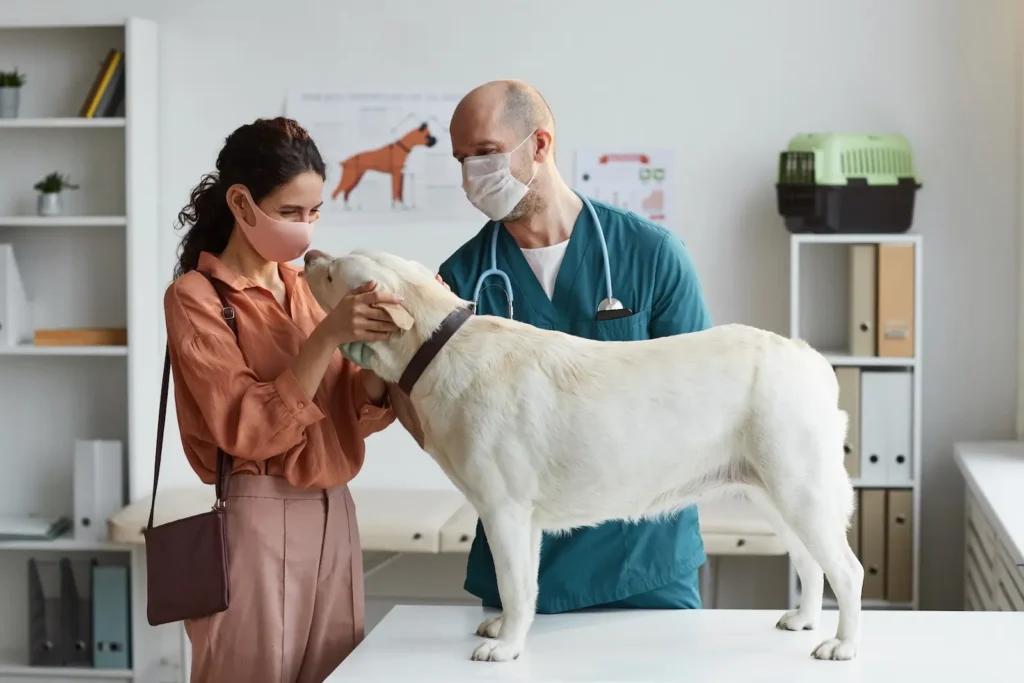
A travel-focused vet appointment is one of the most important steps in pet travel planning. This visit is not only about checking your pet’s overall health but also where you confirm vaccination schedules, identify whether your destination requires additional testing, and map out the timeline for official travel paperwork.
Many destinations require a health certificate within a strict window before departure, so your veterinarian will also help you plan the final exam date and any steps that must happen before that.
To make the appointment as productive as possible, bring your destination country and travel date, your pet’s vaccination records and medical history, and your microchip information (including the chip number and registration details). Your veterinarian can then confirm whether your rabies vaccinations align with the destination’s requirements, advise on parasite prevention treatments with strict timing windows, and guide you on whether rabies antibody titer testing or other screening is needed based on your route and destination.
Secure Documentation & Microchip Compliance Early
Documentation is what determines whether your pet is cleared for entry, held for additional review, or placed into quarantine. Many countries require an ISO-compatible 15-digit microchip, and it must be scannable at inspection. Just as important, the microchip typically must be implanted before the rabies vaccination because the rabies certificate must be tied to a verified microchip ID.
From there, the paperwork trail usually includes a valid rabies certificate, proof of booster history when required, any required rabies antibody titer test results, and a health certificate completed within the destination’s allowed window. Some destinations also require import permits and pre-arrival approvals. In the United States and many other countries, the health certificate may also require an official endorsement from a government authority (such as USDA/APHIS or a local equivalent), which adds additional timing and logistical considerations.
Reduce Stress & Make Quarantine Easier
Even when quarantine is planned and unavoidable, the experience can still be stressful for pets. The more familiar your pet is with travel routines and the crate environment, the more comfortable they tend to be during transport, inspections, and time away from home.
A few practical steps can help:
- Begin crate training early.
- Keep routines stable leading up to travel.
- Pack familiar items like a blanket or toy.
- Discuss calming strategies with your veterinarian.
It also helps to plan for basic logistics such as food preferences, medication schedules, and any special needs your pet may have. If your pet has anxiety, mobility limitations, or a medical condition, your veterinarian and pet travel professional can help you plan accommodations that support comfort and compliance throughout the process.
Avoid Common Mistakes That Can Lead to Unexpected Quarantine
Most quarantine surprises happen for a simple reason: one key requirement was missed, completed in the wrong order, or documented incorrectly. A common example is implanting a microchip after the rabies vaccine, which can invalidate the rabies certificate for many destinations.
Another frequent issue is timing, with vaccines administered too close to travel, titer tests completed outside the permitted window, or waiting periods not fully met.
Paperwork problems are also a major cause of unexpected holds. Using the wrong form version, missing endorsements, incorrect date formats, or a microchip number that does not match can trigger inspection delays or quarantine placement even when a pet is healthy. Transit routes can add risk as well, since some layover countries apply their own entry rules that may require advance notification or additional documentation.