Moving or traveling to Hawaii with a pet takes more preparation than most people expect. Unlike most U.S. states, Hawaii has some of the strictest animal import rules in the country. These requirements exist to protect the islands from rabies and other diseases that could threaten public health, agriculture, and native wildlife.
For pet owners, that means planning months in advance, following a detailed vaccination and testing timeline, and submitting the correct documentation before arrival. Even a small mistake can delay your pet’s release or lead to quarantine.
The good news is that thousands of pets successfully travel to Hawaii each year without spending much or any time in quarantine. With the right preparation and guidance, the process becomes far more manageable.
In this guide, we explain Hawaii’s pet quarantine system, key requirements, the step-by-step preparation process, and the fees associated with bringing a pet to the islands. We also share how working with an experienced pet relocation service like our team at Pets in Transit can simplify the entire journey.
Why Hawaii Has Strict Pet Quarantine Rules
Hawaii is the only U.S. state that is completely rabies free. Maintaining that status is extremely important for the health of residents, pets, livestock, and the islands’ unique wildlife ecosystems.
Because Hawaii is geographically isolated, preventing rabies from entering the state is far easier than eliminating it once introduced. If rabies were to appear on the islands, it could spread quickly among wildlife and domestic animals, creating serious public health and economic consequences.
To prevent that risk, the Hawaii Department of Agriculture developed a strict animal import program that requires vaccinations, laboratory testing, waiting periods, and arrival inspections. These safeguards help verify that incoming animals are free from rabies before they enter the state.
While the process may feel complicated for pet owners, it plays a major role in protecting Hawaii’s environment and maintaining its rabies-free status.
Hawaii Pet Quarantine Rules: An Overview
Bringing a dog or cat to Hawaii involves following a detailed import program administered by the Hawaii Department of Agriculture. The goal of these rules is simple: to verify that every incoming pet is rabies free before it enters the state. To accomplish this goal, Hawaii uses a combination of vaccinations, blood testing, waiting periods, documentation review, and arrival inspections.
Depending on how well a pet’s preparation timeline is completed before travel, animals may qualify for immediate release at the airport, a short quarantine period, or a longer quarantine program.
Direct Airport Release (DAR)
The Direct Airport Release program is the most common goal for pet owners moving or traveling to Hawaii. Pets that complete all vaccination, testing, waiting period, and documentation requirements before travel may qualify to be released the same day they arrive.
After landing at the Daniel K. Inouye International Airport in Honolulu, Oahu—the largest airport in Hawaii—pets are transported to the nearby Animal Quarantine Station for inspection. Officials verify the microchip, review paperwork, and confirm that all import requirements were completed correctly. If everything is in order, many pets are released to their owners within a few hours of arrival.
Because the timeline requirements are strict, even small errors with paperwork, vaccination timing, or the waiting period can prevent a pet from qualifying for DAR.
5 Day or Less Program
The 5 Day or Less program is designed for pets that meet most requirements but have minor issues with timing or documentation. Instead of going home the same day, these pets stay at the Animal Quarantine Station for a short monitoring period. As the name suggests, the stay lasts a maximum of five days. In many cases, pets are released sooner once officials confirm that the remaining requirements have been satisfied.
While this program prevents the long 120-day quarantine, most owners still try to qualify for DAR whenever possible to reduce stress on their pets.
Standard (120-Day) Quarantine Program
Pets that arrive without meeting Hawaii’s vaccination, testing, or waiting period requirements may be placed into the standard quarantine program. This program can last up to 120 days, depending on the circumstances.
This longer quarantine is rare when owners follow the correct preparation timeline. Most pets qualify for either DAR or the 5 Day or Less program when the process is planned correctly.
Eligible Animals, Breed Restrictions, & Prohibited Animals
Hawaii’s pet import program primarily applies to dogs and cats. These animals must meet all vaccination, testing, and documentation requirements before entering the state.
Other animals such as birds, reptiles, rodents, and exotic species fall under different import rules and often require additional permits. Some species are restricted or prohibited entirely due to environmental risks.
Hawaii does not ban specific dog breeds from entering the state. However, certain animals are prohibited because they pose risks to native ecosystems or public safety. Examples of restricted or prohibited animals may include the following:
- Wolf hybrids
- Certain exotic cats
- Non-domesticated carnivores
- Some reptiles and amphibians
Hybrid animals such as wolf-dog crosses can face strict import restrictions or may not be allowed into the state at all. If a pet falls into a hybrid or exotic category, special permits or additional approvals may be required.
Pet owners traveling with uncommon species should review Hawaii’s animal import regulations carefully or work with a relocation specialist before making travel plans.
Approved Ports of Entry
Most pets arrive through Daniel K. Inouye International Airport in Honolulu, Oahu, where Hawaii’s primary Animal Quarantine Station is located. Pets may also enter through certain neighbor island airports, including:
- Ellison Onizuka Kona International Airport (Hawaii Island)
- Kahului Airport (Maui)
- Lihue Airport (Kauai)
To use these airports, pets must qualify for DAR and obtain a Neighbor Island Inspection Permit (NIIP) in advance. Pets that do not qualify for this program must first arrive in Honolulu for inspection.
Key Requirements for Bringing a Pet to Hawaii
Avoiding pet quarantine in Hawaii depends on completing several medical, testing, and documentation requirements before your pet travels. These steps are designed to verify rabies immunity and confirm that each animal entering the state can be safely released without putting Hawaii’s rabies-free status at risk.
Here are the core requirements every dog or cat must complete before entering Hawaii.
Microchip Identification
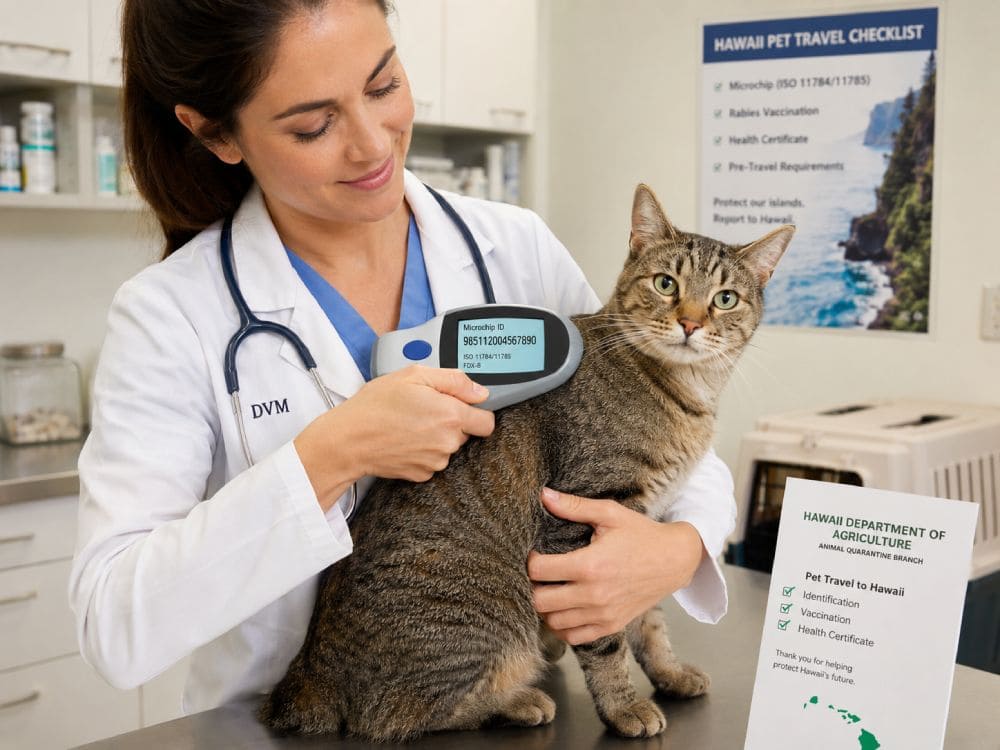
Every pet entering Hawaii must have a readable ISO-compatible microchip implanted before any rabies vaccinations or blood tests take place.
The microchip serves as the official identification for the pet throughout the entire import process. Veterinarians, laboratories, and Hawaii’s Animal Quarantine Station use this number to match medical records and documentation to the correct animal.
If the microchip is implanted after vaccinations or testing, Hawaii may not accept the records. For that reason, most veterinarians recommend confirming the chip is working and scanning correctly during early preparation appointments.
Rabies Vaccinations
Hawaii requires two rabies vaccinations administered at least 30 days apart during a pet’s lifetime. The most recent rabies vaccination must still be valid on the day the pet arrives in Hawaii.
These vaccines must be given by a licensed veterinarian and documented with official rabies certificates. The vaccination must occur before the antibody titer test can be performed.
Pets that receive their second rabies vaccination shortly before travel may not have enough time to complete the remaining steps in the timeline. That’s why we recommend verifying vaccination history several months before travel plans are finalized.
Rabies Antibody Titer Test (FAVN)
The Fluorescent Antibody Virus Neutralization (FAVN) test measures whether a pet has enough rabies antibodies in its system. This blood test must be performed by a veterinarian and sent to one of Hawaii’s approved laboratories, typically:
- Kansas State University Veterinary Diagnostic Laboratory
- Auburn University
- University of Missouri, Veterinary Medical Diagnostic Laboratory
- Department of Defense (DOD) Laboratory
Laboratory processing and reporting can take several weeks, so most pet owners schedule the FAVN test three to four months before travel. Pets must receive a passing result of 0.5 IU/ml or higher to qualify for entry under Hawaii’s import programs.
Mandatory Waiting Period
After the FAVN test, Hawaii requires a minimum waiting period of 30 days before the pet can enter the state under the DAR or 5 Day or Less program. This waiting period begins on the date the lab receives the blood sample, not the date the veterinarian collects it.
If a pet arrives in Hawaii before the full 30 days have passed, it will remain in quarantine until the waiting period is complete.
Pet Health Certificate
A pet health certificate—also called a Certificate of Veterinary Inspection (CVI)—issued by a licensed veterinarian is required shortly before travel. This document confirms that the pet has been examined, appears healthy, and is cleared for air travel.
During this veterinary visit, the doctor typically performs a general health exam, verifies the microchip number, and confirms vaccination records. Some airlines may also require additional documentation or parasite treatments.
Most airlines and Hawaii authorities require the certificate to be issued within 10 days of the pet’s arrival in Hawaii. Because the timing window is narrow, many pet owners schedule this exam one to two weeks before departure.
Required Documentation
Several documents must be submitted to the Hawaii Department of Agriculture before the pet arrives in the state. These forms allow inspectors to review vaccination records, laboratory results, and program eligibility in advance.
Required documents typically include the following:
- Dog & Cat Import Form: AQS 279
- Two original rabies vaccination certificates
- FAVN rabies antibody test results
- Original health certificate (CVI)
- Travel itinerary and flight information (i.e., airlines, flight number, date, and time of arrival)
- Microchip identification documentation
- Payment (cashier’s check or money order made out to the Hawaii Department of Agriculture; no personal checks) for the chosen import program
All paperwork must arrive at the Animal Quarantine Station at least 10 days before the pet’s arrival date. If documents arrive late, the pet may be held at the quarantine facility until the paperwork is reviewed.
Because the documentation process involves multiple veterinary records and strict submission deadlines, many travelers choose to have a relocation specialist review paperwork before it is sent to Hawaii.
Hawaii Pet Quarantine Process: 7 Steps to Follow
Preparing a pet for travel to Hawaii involves completing several steps in a specific order. Each stage builds on the previous one, and skipping or rearranging steps can cause delays or make a pet ineligible for Direct Airport Release.
Because of vaccination timing, laboratory testing, and the mandatory waiting period, most owners begin this process four to six months before their planned move. Following a clear preparation timeline helps avoid last minute surprises and gives enough time to correct any issues that may arise.
Step 1: Microchip Your Pet
If your pet does not already have an ISO-compatible microchip, getting one should be the very first step in the process. Hawaii requires the microchip to be implanted before rabies vaccinations and before the FAVN blood test so that all medical records are tied to the correct identification number.
During this visit, your veterinarian will implant the chip and confirm that it scans properly. It is a good idea to ask the clinic to record the microchip number on all medical records moving forward. Many owners also register the chip with a national microchip database so their contact information is linked to their pet.
Because the microchip becomes the official identifier throughout the import process, inspectors in Hawaii will scan it upon arrival to confirm it matches the vaccination records and laboratory results submitted earlier.
Step 2: Complete Rabies Vaccinations
Next, your pet must receive the required rabies vaccinations. Hawaii requires two rabies vaccines administered at least 30 days apart during the pet’s lifetime. The most recent vaccination must still be valid when the pet arrives in Hawaii.
For pets that already have two documented rabies vaccinations, this step may already be complete. However, owners should still verify that vaccination certificates are accurate and include the veterinarian’s signature, the vaccine manufacturer, and the expiration date.
If a booster shot is needed, it should be administered before scheduling the FAVN blood test. We recommend completing the vaccination review four to five months before travel to allow enough time for the remaining steps.
Step 3: Perform the FAVN Rabies Antibody Test
After the rabies vaccination requirements are satisfied, your veterinarian will perform the FAVN rabies antibody test. During this appointment, a blood sample is collected and sent to an approved laboratory. The lab analyzes the sample to confirm that the pet has developed adequate immunity to rabies. A passing result must show 0.5 IU/ml or higher.
Laboratory processing and reporting can take several weeks, so most owners schedule this test three to four months before travel.
Once the laboratory receives the blood sample, the official waiting period clock begins. This date becomes extremely important when calculating when the pet is allowed to enter Hawaii.
Step 4: Complete the 30-Day Waiting Period
Hawaii requires a minimum waiting period of 30 days after the laboratory receives the FAVN test sample. This waiting period helps confirm that the pet remains rabies-free after testing.
The countdown starts on the date the lab receives the blood sample, not the day your veterinarian collected it. If a pet arrives in Hawaii before the full 30 days have passed, it will be placed into quarantine until the remaining days are completed. Many pet owners use this waiting period to begin preparing paperwork, confirm travel plans, and review all vaccination records to avoid problems later in the process.
Step 5: Get Pet Health Certificate & Submit Documentation
As the travel date approaches, schedule a veterinary appointment to obtain the required health certificate. This certificate confirms that the pet has been examined and appears healthy enough for air travel.
Most airlines and Hawaii authorities require the CVI to be issued within 10 days of arrival in the state. During this visit, the veterinarian will also verify the microchip number and review vaccination records.
At the same time, owners must submit all required documents to the Hawaii Department of Agriculture. These typically include the Dog & Cat Import Form: AQS 279, rabies vaccination certificates, FAVN test results, travel itinerary and flight information, microchip identification documentation, and payment for the appropriate import program. The paperwork must arrive at the Animal Quarantine Station at least 10 days before the pet’s arrival date.
Step 6: Schedule Travel to Hawaii
With the medical and documentation steps complete, the next step is arranging travel. Flights should arrive during Hawaii’s approved inspection hours so that pets can be processed promptly after landing.
Most pets that qualify for DAR travel through Daniel K. Inouye International Airport in Honolulu, where the Animal Quarantine Station is located. Owners who want their pets to fly directly to a neighbor island airport must apply for a NIIP ahead of time.
Airlines may have additional requirements for pet carriers, check-in procedures, and temperature restrictions, so it is helpful to confirm those details well in advance of departure.
Step 7: Prepare for Arrival, Inspection, & Release
When the aircraft lands in Honolulu, pets are transported to the nearby Animal Quarantine Station for their arrival inspection. Officials scan the microchip, review the pet’s documents, and confirm that vaccination records and laboratory results match the paperwork submitted earlier.
If all requirements have been satisfied and the pet qualifies for DAR, many animals are released to their owners within a few hours. Pets that do not meet every requirement may be transferred into the 5 Day or Less program for short-term observation or the standard quarantine program for up to 120 days.
Once the inspection is complete and the pet is cleared for entry, owners can finally begin enjoying life in Hawaii together.
Hawaii Pet Quarantine Cost & Fees
Bringing a pet to Hawaii involves several government fees in addition to veterinary and travel costs. The exact amount varies depending on which program the pet qualifies for.
| Fee Type | Cost (Approximate) |
|---|---|
| Direct Airport Release (DAR) Program | $185 |
| 5 Day or Less Quarantine Program | $244 |
| Neighbor Island Inspection Permit (NIIP) | $165 |
| Re-Entry Fee for Previously Qualified Pets | $98 |
| Standard Quarantine Program (Up to 120 Days) | $1,080 |
Additional expenses often include veterinary visits, laboratory testing, airline pet transport fees, travel crates, and document preparation services.
6 Common Mistakes That Can Cause Your Pet to Be Quarantined in Hawaii
Even when owners follow most of the requirements, small technical mistakes can still result in a pet being held for inspection or placed into the 5 Day or Less program or the standard quarantine program. Hawaii’s import process is very detail-oriented, and timing errors or incomplete paperwork are among the most common reasons pets are delayed at the airport.
Understanding the mistakes that most often lead to quarantine can help pet owners avoid unnecessary stress for both themselves and their animals
Mistake 1: Arriving Before the 30 Day Waiting Period Ends
One of the most common issues occurs when pets arrive before the 30-day waiting period has fully passed after the FAVN test sample reaches the laboratory.
The waiting period begins on the date the lab receives the blood sample, not the date the veterinarian collects it. If travel is scheduled too early, the pet will remain at the quarantine facility until the remaining days have passed.
To avoid this problem, confirm the laboratory “received date” on the FAVN test report and calculate the earliest eligible arrival date carefully before booking flights.
Mistake 2: Missing or Incorrect Documentation
Incomplete paperwork or incorrect forms can delay your pet’s release even if all medical requirements have been completed. Common documentation issues include missing signatures on vaccination or health certificates, incorrect microchip numbers, or failing to include required forms such as the Dog & Cat Import Form: AQS 279.
Carefully reviewing every document before submission and keeping organized copies of all records can help prevent these problems.
Mistake 3: Rabies Vaccination Timing Problems
Hawaii requires two rabies vaccinations administered at least 30 days apart during the pet’s lifetime. The most recent vaccination must still be valid when the pet arrives in the state. If the vaccination timeline does not meet these requirements, the pet may not qualify for DAR.
Owners should review vaccination history several months before travel to confirm the schedule meets Hawaii’s rules.
Mistake 4: Microchip Numbers That Do Not Match Records
Because the microchip acts as the official identification for the pet, the number must match every document submitted during the import process. If the number on the rabies certificates, laboratory test results, or import paperwork does not match the chip scanned at arrival, inspectors may delay release until the discrepancy is resolved.
Verifying the microchip number during veterinary visits and checking that it appears correctly on all documents can help avoid this situation.
Mistake 5: Health Certificate Issued Outside the Allowed Window
Health certificates must be issued within 10 days of the pet’s arrival in Hawaii. If the CVI is issued too early or expires before arrival, inspectors may require additional documentation or place the pet into quarantine.
Scheduling the veterinary exam one to two weeks before travel helps keep the certificate within the required timeframe.
Mistake 6: Documents Submitted Too Late
All import documents and payments must arrive at the Animal Quarantine Station at least 10 days before the pet arrives in Hawaii.
If paperwork arrives after this deadline, inspectors may not have enough time to review the documents before the pet lands. In these cases, the pet may be held at the facility until the paperwork can be processed.
Submitting documentation well in advance and using trackable delivery methods can help prevent last-minute issues.
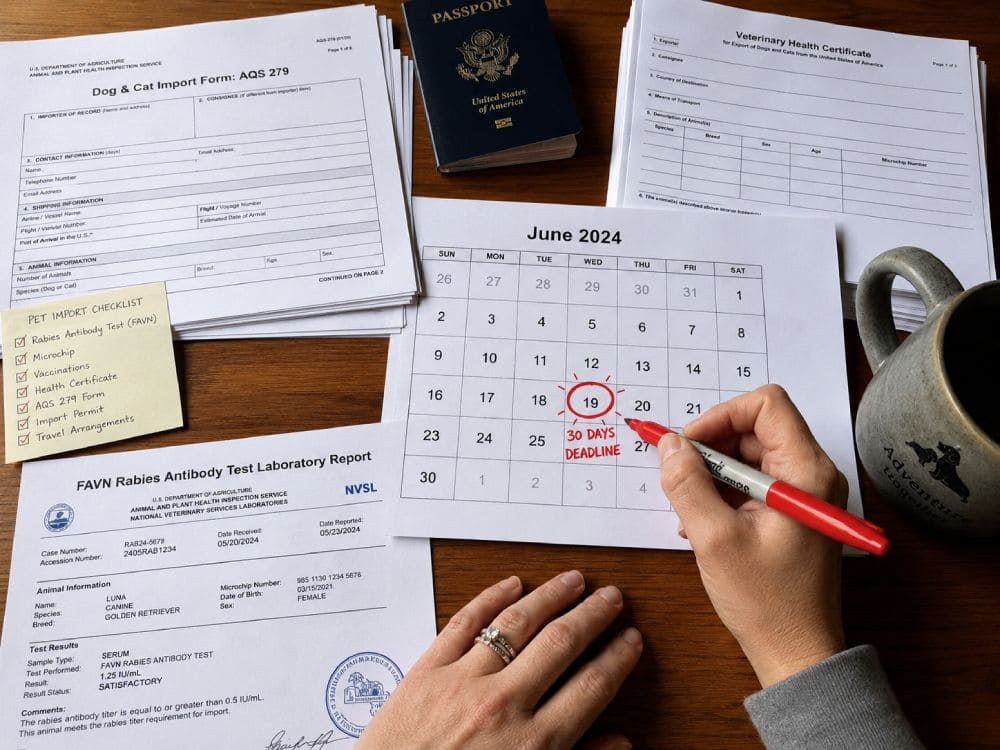
6 Tips for How to Avoid Pet Quarantine in Hawaii
Even when pet owners understand the rules, the preparation process can feel overwhelming. Small timing mistakes or paperwork errors are the most common reasons pets are held for additional inspection or short quarantine stays.
Following a few practical strategies can greatly improve the chances that your pet qualifies for DAR and goes home with you the same day it arrives.
1. Start the Preparation Process Early
The most effective way to avoid quarantine is to begin planning four to six months before travel. Hawaii’s process includes vaccinations, laboratory testing, and a mandatory 30-day waiting period, all of which take time to complete. Starting early also gives pet owners room to fix unexpected issues such as delayed lab results, missing vaccination records, or scheduling conflicts with veterinary appointments.
2. Follow the Required Vaccination Timeline
Rabies vaccination timing is often where mistakes occur. Hawaii requires two rabies vaccinations administered at least 30 days apart, and the most recent vaccine must remain valid on the day your pet arrives in the state.
Review your pet’s vaccination history early in the process so there is enough time to schedule booster shots if necessary before moving on to the FAVN blood test.
3. Track the FAVN Waiting Period Carefully
The 30-day waiting period begins when the laboratory receives the blood sample, not when the veterinarian collects it. Miscalculating this date can cause a pet to arrive too early and be placed into quarantine until the remaining days are completed. Always confirm the laboratory received date on the FAVN report and use that date to determine the earliest possible arrival day.
4. Double-Check All Paperwork Before Submission
Hawaii’s Animal Quarantine Station reviews documents before a pet arrives, but paperwork errors can still delay release. Incorrect microchip numbers, missing signatures, or incomplete forms may require additional verification once the pet lands.
Review every document carefully before submission, including vaccination certificates, laboratory reports, and the Dog & Cat Import Form: AQS 279.
5. Schedule the Health Certificate at the Right Time
Health certificates must be issued within 10 days of the pet’s arrival in Hawaii. If the certificate is issued too early, it may no longer be valid when the pet lands. Scheduling the veterinary exam about one to two weeks before departure typically keeps the certificate within the correct timeframe.
6. Work with a Pet Travel or Relocation Specialist
Many families choose to work with professional pet travel or relocation services to manage the process from start to finish.
Specialists such as Pets in Transit help coordinate veterinary visits, review documentation for accuracy, track timeline requirements, and organize travel logistics. Having an experienced team review each step can significantly reduce the risk of mistakes that might otherwise lead to quarantine.
Example Timeline for Preparing a Pet for Hawaii Travel
Preparing a pet for Hawaii travel works best when the process is mapped out several months in advance. Because vaccinations, laboratory testing, waiting periods, paperwork review, and airline scheduling all happen at different stages, following a structured timeline helps pet owners stay organized and avoid missing critical deadlines.
| Time Before Travel | Preparation Step | Details |
|---|---|---|
| 5–6 Months Before Travel | Implant or verify microchip | Confirm your pet has a readable ISO-compatible microchip. The microchip must be implanted before the FAVN blood test and before rabies vaccination documentation is finalized so all records match the identification number. |
| 4–5 Months Before Travel | Update rabies vaccinations if needed | If your pet’s rabies vaccination is expired or nearing expiration, schedule a booster. The most recent rabies vaccination must still be valid when the pet arrives in Hawaii. |
| 3–4 Months Before Travel | Perform the FAVN rabies antibody test | Your veterinarian collects a blood sample and sends it to an approved laboratory. Pets must receive a passing result of 0.5 IU/ml or higher. Laboratory processing can take several weeks. |
| 3 Months Before Travel | Start the 30-day waiting period | The mandatory waiting period begins on the date the laboratory receives the blood sample, not the day it was collected. Mark this date carefully and calculate the earliest eligible arrival date. |
| 2–3 Months Before Travel | Begin preparing documentation | Start gathering required paperwork such as rabies vaccination documentation, microchip records, and the Dog & Cat Import Form: AQS 279. It’s also a good time to verify airline pet policies and crate requirements. |
| 1–2 Months Before Travel | Confirm eligibility for Direct Airport Release (DAR) | Once the waiting period has passed and all medical requirements are complete, confirm that your pet qualifies for the DAR program or the 5 Day or Less program. |
| 3–4 Weeks Before Travel | Book flights and confirm arrival inspection logistics | Schedule flights that arrive during approved inspection hours. If flying directly to Maui, Kauai, or Hawaii Island, apply for a Neighbor Island Inspection Permit (NIIP) ahead of time. |
| 10–14 Days Before Trave | Schedule veterinary exam for health certificate | Visit your veterinarian for a pre-travel health exam. The veterinarian will verify the microchip number, review vaccination records, and issue the health certificate required for airline travel and Hawaii entry. |
| At Least 10 Days Before Travel | Submit import documents and fees | Send all required paperwork and payments to the Hawaii Animal Quarantine Station. Documents must arrive at least 10 days before your pet lands in Hawaii so inspectors have time to review them. |
| Travel Day | Arrive in Hawaii for inspection | After landing, pets are transported to the Animal Quarantine Station for microchip scanning, document review, and arrival inspection. Pets that meet all requirements may qualify for DAR and leave the airport the same day. |
This timeline shows a typical preparation schedule for pets that qualify for DAR. Individual situations may vary slightly depending on a pet’s vaccination history, veterinary availability, and laboratory processing times.
Hawaii Pet Quarantine Checklist
Preparing a pet for Hawaii travel involves many moving parts, and it can be easy to overlook a small requirement along the way. Use the checklist below as a final review while preparing your pet for travel to the islands to stay organized and confirm that every step of the process has been completed before departure.
Veterinary & Health Preparation
- Implant an ISO-compatible microchip before any rabies vaccinations or blood testing so that all records link to the correct identification number
- Verify that your pet has received at least two rabies vaccinations administered at least 30 days apart during its lifetime.
- Confirm that the most recent rabies vaccination will still be valid on the date your pet arrives in Hawaii.
- Schedule a veterinary appointment to collect the blood sample for the FAVN rabies antibody test and send it to an approved laboratory.
- Wait for a passing FAVN test result showing a rabies antibody level of at least 0.5 IU/ml.
- Track the laboratory received date and complete the mandatory 30-day waiting period before your pet travels.
- Schedule a veterinary appointment within 10 days of travel to obtain the required health certificate.
Documentation & Compliance
- Gather required documentation including rabies vaccination certificates, microchip records, and the Dog & Cat Import Form: AQS 279.
- Review all paperwork carefully to confirm that the microchip number, vaccination dates, and laboratory results match across every document.
- Submit all required documents and program fees to the Hawaii Animal Quarantine Station at least 10 days before your pet’s arrival date.
Travel Planning & Logistics
- Book flights that arrive during approved inspection hours at Daniel K. Inouye International Airport or an approved neighbor island airport.
- Apply for an NIIP if your pet will arrive directly on Maui, Kauai, or Hawaii Island.
- Confirm airline requirements for pet carriers, check-in procedures, and temperature restrictions before travel day.
Pre-Travel Preparation
- Prepare an airline-approved travel crate that is properly labeled and comfortable for your pet during the flight.
- Bring physical and digital copies of all veterinary records and documentation with you when traveling to Hawaii.
Relocating or traveling with a pet to Hawaii requires careful coordination between veterinarians, laboratories, airlines, and government agencies. The process involves strict timelines, detailed paperwork, and multiple medical requirements that must all line up correctly before your pet travels. Even small mistakes can lead to delays or unexpected quarantine time.
At Pets in Transit, we help families navigate this complex process every day. Our team works closely with cat and dog owners to organize each step of the timeline, review documentation, and coordinate veterinary requirements so pets can arrive in Hawaii as smoothly as possible.
Coordinate Veterinary Requirements
Many of the most important steps in the Hawaii import process involve veterinary visits. We help guide pet owners through these requirements by outlining the correct order for vaccinations, microchipping, and the FAVN rabies antibody test.
Our team works directly with your veterinarian to confirm that vaccination timelines, laboratory testing, and documentation meet Hawaii’s requirements, which helps reduce the risk of timing issues that could otherwise prevent your pet from qualifying for DAR.
Manage Health Certificates
One of the most time sensitive requirements for traveling pets is the health certificate issued shortly before departure. Because this certificate must typically be issued within 10 days of arrival in Hawaii, scheduling and paperwork timing are critical.
Our team helps coordinate veterinary appointments and prepares the necessary documentation so your pet receives the correct health certificate within the required window. Through our dedicated health certificate service, we assist with reviewing paperwork, coordinating with veterinarians, and confirming that the certificate meets airline and Hawaii Department of Agriculture requirements.
Review Documentation & Compliance
Hawaii’s import process requires several documents to be submitted in advance, including vaccination certificates, FAVN laboratory results, and the Dog & Cat Import Form: AQS 279. Small documentation errors can delay release once your pet arrives.
We carefully review each document to confirm that microchip numbers, vaccination dates, laboratory results, and form details are consistent across all records. This extra layer of review helps reduce the chance of problems during the arrival inspection.
Plan Safe & Compliant Travel
Beyond medical requirements, traveling pets must also meet airline rules, crate standards, and arrival inspection schedules. Our team helps organize travel logistics so flights align with Hawaii’s inspection hours and entry procedures. We also help pet owners prepare airline-approved travel crates, confirm airline pet policies, and coordinate arrival logistics so pets can move smoothly through the inspection process once they land in Hawaii.
Guide You Through the Entire Process
Perhaps most importantly, we guide pet owners through the entire relocation journey from start to finish. Instead of trying to track dozens of requirements on your own, you have an experienced team helping manage the timeline, answer questions, and keep every step organized.
By working with Pets in Transit, many families find that the Hawaii pet relocation or travel process becomes far more manageable and far less stressful for both pets and their owners.
Hawaii Pet Quarantine FAQs
Do Pets Have to Be Quarantined in Hawaii?
Not always. Many pets can avoid quarantine if they meet Hawaii’s vaccination, testing, and documentation requirements before travel. Pets that complete the required rabies vaccinations, pass the FAVN rabies antibody test, complete the 30-day waiting period, and submit all paperwork on time may qualify for the Direct Airport Release program, allowing them to go home the same day they arrive.
How Long Do Pets Have to Be Quarantined in Hawaii?
Quarantine length depends on whether the pet meets Hawaii’s import requirements before arrival. Pets that qualify for Direct Airport Release may leave the airport within a few hours. Pets that meet most requirements may enter the 5 Day or Less program, while pets that do not meet vaccination, testing, or waiting period rules may be placed in the standard quarantine program for up to 120 days.
How Can I Avoid Pet Quarantine in Hawaii?
The best way to avoid quarantine is to start preparing several months before travel. Your pet must have two rabies vaccinations, a passing FAVN rabies antibody test, and a completed 30-day waiting period before entering the state. Submitting all documentation to the Hawaii Animal Quarantine Station at least 10 days before arrival also helps prevent delays. Many pet owners work with relocation specialists to review paperwork and manage the timeline.
Can I Bring My Cat If I Move to Hawaii?
Yes. Cats can travel to Hawaii under the same import rules that apply to dogs. Cats must have a microchip, two rabies vaccinations, a passing FAVN rabies antibody test, and a completed waiting period before travel. With proper preparation, many cats qualify for Direct Airport Release and do not need to stay in quarantine.
What Paperwork Is Required to Bring a Pet to Hawaii?
Pet owners must submit several documents before their pet arrives in Hawaii. These typically include the Dog & Cat Import Form: AQS 279, rabies vaccination certificates, FAVN test results, health certificates, microchip information, and payment for the applicable inspection or quarantine program. All documents must arrive at the Animal Quarantine Station at least 10 days before the pet’s arrival.
Do I Need a Health Certificate to Bring My Pet to Hawaii?
Yes. A licensed veterinarian must issue a health certificate shortly before travel confirming that your pet is healthy and fit for air travel. In most cases, this certificate must be issued within 10 days of arrival in Hawaii. The veterinarian will also verify the microchip number and vaccination records during the exam.
When Should I Start Preparing My Pet to Move to Hawaii?
Which Airports in Hawaii Allow Pets to Enter?
Most pets enter Hawaii through Daniel K. Inouye International Airport in Honolulu, where the main Animal Quarantine Station is located. Pets that qualify for Direct Airport Release may also enter through certain neighbor island airports, including Kahului Airport (Maui), Ellison Onizuka Kona International Airport (Hawaii Island), and Lihue Airport (Kauai), if they obtain a Neighbor Island Inspection Permit.
What Happens If My Pet’s Paperwork Is Incorrect?
If paperwork is incomplete, inaccurate, or submitted late, the pet may be held at the Animal Quarantine Station until the issue is resolved. In some cases, pets may be placed in the 5 Day or Less quarantine program while inspectors verify records or be required to stay for a longer quarantine period of up to 120 days. Carefully reviewing documentation before submission can help prevent these delays.
Traveling with Your Pet to Hawaii? Contact Pets in Transit
Hawaii’s strict pet import rules exist to protect the islands’ rabies free-status and safeguard the health of residents, animals, and wildlife. While the process requires careful planning, thousands of pets successfully arrive in Hawaii each year without spending time in quarantine.
Understanding the requirements, preparing months in advance, and following the correct timeline can make a major difference in how smoothly the process goes.
For pet owners relocating or traveling to Hawaii, working with an experienced pet transit service can remove much of the uncertainty and administrative burden involved in the journey. If you are planning a move or trip to Hawaii with your pet, we are here to help guide you through every step of the process.
At Pets in Transit, we coordinate veterinary documentation, manage health certificates, review paperwork, and help organize compliant travel plans so your pet can arrive in Hawaii as smoothly as possible. Our team understands the strict timelines and detailed requirements involved in Hawaii pet relocation, and we work closely with you to keep every step organized and on schedule. With the right preparation and support, the journey to Hawaii can be far less stressful for both you and your pet.
Are you preparing for a move or visit to the islands? Contact us today to request a free quote and learn how we can help simplify the process and make your pet’s relocation to Hawaii easier.
Aloha and safe travels!