
Transporting a pet is not the same as mailing a package or booking a simple plane ticket. Your pet is a family member, and the price of pet transportation reflects more than the miles between two locations. It can include route planning, safe handling, travel crate requirements, health documents, airport coordination, customs support, and personalized care along the way.
That’s why pet transport service costs can vary so much. A short local trip may cost a few hundred dollars, while a complex international relocation can cost several thousand dollars. The final price depends on where your pet is going, how they are traveling, how much support you need, and what rules apply to the route.
If you are planning a move, adoption, military relocation, extended trip, or international transfer, understanding your options can help you budget. In this guide, we’ll walk through the main pet transport service options, typical cost ranges, factors that affect pricing, and practical ways to plan your budget.
What Are Pet Transport Services?
Pet transport services help move pets from one location to another safely and legally. Depending on the trip, the process may include local ground transportation, long distance ground travel, air travel coordination, flight nanny services, international relocation support, crate planning, documentation guidance, pickup and delivery, customs assistance, and travel updates.
The right transport option depends on the answers to several questions:
- What’s your destination?
- How far does your pet need to travel?
- Can your pet fly safely, or is ground transport better?
- Is your timeline flexible?
- Does your pet need special care?
- Are there airline, state, or international documentation requirements?
- Do you want basic transportation or full service relocation support?
Once those details are clear, it becomes easier to determine the cost.
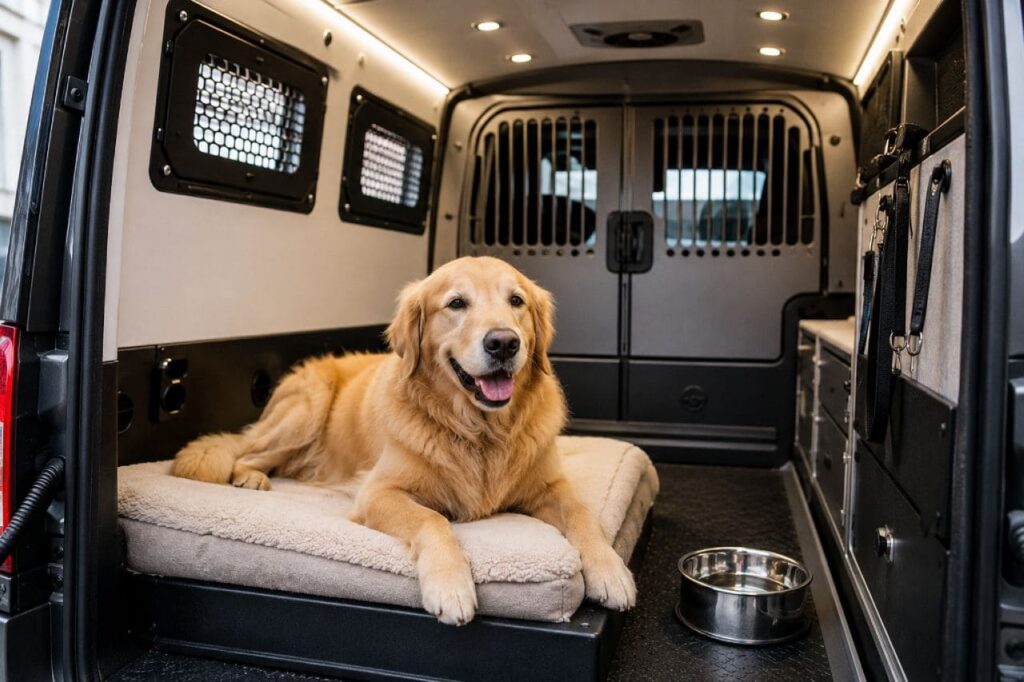
Pet Transport Service Options
Pet transportation is not one single service. There are several options, and each one comes with a different price range, level of convenience, and type of care.
Local Ground Transport
Local ground transport is usually used for shorter trips and may include situations like airport pickup and drop off, transportation to a veterinarian, boarding facility transfers, grooming appointments, or moves within the same city or region.
This level is often one of the most affordable pet transport options because the distance is shorter and the logistics are simpler. However, the final cost can still depend on mileage, timing, location, wait time, and any special handling needs. Local ground transport is best for short routes, pets that travel well by car, and owners who need dependable support nearby.
Long Distance Ground Transport
Long distance ground transport is used for pets moving across state lines or across the country. It can be a good choice for pets that cannot fly, owners who prefer to avoid air travel, large dogs, senior pets, anxious pets, or breeds that may face airline restrictions.
Pricing usually depends on mileage, route complexity, number of travel days, overnight care, fuel, rest stops, driver time, and whether the ride is shared or private. A shorter regional move may cost far less than a cross country private trip.
Long distance ground transport can take longer than flying, but it may offer a calmer option for some pets and a more flexible route for owners.
Shared Ride Pet Transport
Shared ride pet transport means your pet travels along a planned route with other pets. Since the cost of the trip is shared across multiple customers, this option is often more affordable than private transport.
The tradeoff is flexibility. Shared routes usually involve wider pickup and delivery windows, additional stops, and longer travel times. It can work well for healthy pets with flexible schedules but may not be ideal for pets that need a direct route or extra attention.
Shared ride transport is best for budget conscious owners who can be flexible with timing.
Private Ride Pet Transport
Private ride pet transport gives your pet or your household’s pets dedicated transportation. It usually costs more because the route, driver time, vehicle space, and care are reserved for your pet.
The benefits are significant. Private transport may allow for a more direct route, fewer stops, less exposure to other animals, and more personalized care. It can be a better fit for anxious pets, senior pets, pets with medical considerations, large dogs, multiple pet households, or owners who want the most controlled ground travel option.
Private ride transport is best when comfort, timing, and individualized care matter more than getting the lowest price.
Flight Nanny Services
A flight nanny is a trained person who accompanies a pet during air travel when airline rules allow the pet to travel in-cabin. This option is most common for small dogs, cats, puppies, or kittens that meet airline size and carrier requirements.
Flight nanny pricing may include the nanny’s time, airline ticket, in cabin pet fee, airport coordination, layovers, ground pickup, delivery, and any special scheduling needs. Costs can rise if the trip requires multiple flights, urgent booking, or overnight travel. These services are best for smaller pets whose owners want human supervision throughout the trip.
Air Cargo Pet Transport
Larger pets that cannot travel in-cabin may need to travel through an airline cargo program. It’s common for medium and large dogs, certain domestic moves, and many international relocations.
Air cargo pet transport can be efficient for long distances, but it requires careful planning. Airlines have crate standards, breed restrictions, temperature restrictions, health certificate requirements, seasonal limits, and route limitations. A pet may also need airport transfers, handling support, and destination services. Costs include airfare, the travel crate, documentation, cargo handling, ground transportation to and from the airport, and professional coordination.
Air cargo transport is best when ground travel would take too long or when the pet is too large to travel in-cabin.
International Pet Transport
International pet transport is usually the most complex and often the most expensive service option. Each country has its own rules for bringing animals across the border. Requirements may include a microchip, rabies vaccination records, health certificate, government endorsement, import permit, parasite treatment, blood test, customs clearance, arrival inspection, or quarantine.
As a result, costs can vary dramatically by country. Some destinations are relatively straightforward, while others require months of preparation and multiple steps before the pet can travel.
International pet transport is best for overseas moves, expats, military families, international adoptions, and pet owners who need help managing country specific requirements.
Door-to-Door Pet Relocation
Door-to-door pet relocation is a full service option that manages the trip from pickup to final delivery. It combines several services, such as ground transport, air travel coordination, crate guidance, documentation support, customs assistance, and owner updates.
This option generally costs more than basic transport because it includes more planning and support. But for many owners, that added support is worth it because they don’t have to manage every piece of the process alone.
Door-to-door relocation is best for owners who want a smoother, more managed experience from start to finish.
Pet Transport Cost Breakdown
Pet transport pricing depends on the route, pet size, travel method, destination rules, timeline, documentation needs, and service level.
|
Transportation Option |
Average Cost Range |
Best For |
|
Local ground transport |
$100–$500+ |
Short distance moves, airport transfers, vet visits, local pickup and delivery |
|
Long distance ground transport |
$800–$3,000+ |
Domestic relocations, pets that cannot fly, large dogs, flexible timelines |
|
Shared ride ground transport |
$500–$1,500+ |
Budget conscious owners with flexible pickup and delivery dates |
|
Flight nanny service |
$700–$2,500+ |
Small pets that can travel in cabin with a human escort |
|
Domestic air cargo transport |
$1,000–$3,500+ |
Medium or large pets traveling by air within the country |
|
International pet transport |
$2,000–$10,000+ |
Overseas moves, complex documentation, customs, import requirements |
|
Door-to-door full service relocation |
$2,500–$12,000+ |
Owners who want professional management from pickup to final delivery |
These ranges are meant to give you a starting point. Some moves may cost less, while complex relocations may cost more. International pet transport can exceed the upper end depending on the destination, number of pets, quarantine requirements, crate size, airline routing, and the amount of support needed.
The cheapest option is not always the best option. A low price may not include documentation help, crate support, airport transfers, customs assistance, overnight care, or travel updates. When comparing quotes, look closely at what is included.
11 Factors That Influence Pet Transport Services Pricing
Most pet transport quotes are based on a combination of distance, route, pet needs, travel rules, and service level.
Here are the factors that influence the final price.
1. Distance & Route
Distance is one of the biggest cost factors. More miles usually mean more fuel, driver time, planning, and coordination.
Route complexity also makes a difference. A direct route between two major cities may cost less than a route involving remote pickup, remote delivery, detours, limited airline availability, multiple transfers, or extra driving time. Rural areas can also increase pricing because there may be fewer available transport providers nearby.
2. Type of Transportation
Ground transport, flight nanny service, air cargo, and international relocation all have different cost structures.
Ground transport may be more affordable for regional moves or shared routes. It often becomes more expensive for cross country private trips because of mileage, time, and overnight care. Air travel is usually faster for long distances, but it includes airline fees, crate costs, handling charges, airport transfers, documentation, and professional coordination. International moves often cost more because they involve compliance steps in addition to transportation.
3. Shared Service Compared with Private Service
Shared transport is usually less expensive because several pets travel along the same route. It can be a smart option when your pet is healthy, your schedule is flexible, and you are comfortable with a longer travel window.
Private transport costs more because the trip is dedicated to your pet or your household. The route may be more direct, the schedule may be more controlled, and your pet receives more individualized attention.
The right choice depends on your priorities. If budget is the main concern, shared transport may make sense. If your pet needs a quieter or more direct experience, private transport may be the better investment.
4. Pet Size & Breed
Pet size can affect almost every part of the price. Larger pets often need larger crates, more vehicle space, and higher airfare or cargo fees. Oversized crates may also be harder to route by air.
Breed can also matter. Flat faced breeds such as bulldogs, pugs, Boston terriers, and Persian cats may face airline restrictions or require extra planning because of respiratory risk. Some airlines limit or refuse certain breeds during specific seasons or temperatures.
5. Number of Pets
Transporting multiple pets usually increases the total cost. Each pet may need its own crate, paperwork, handling, and travel space. That said, moving multiple pets together may reduce the cost per pet in some situations. For example, two pets from the same household may be able to share part of the same route or pickup process. The details depend on the animals, destination, and transportation method.
6. Travel Crate Requirements
The right pet crate is a requirement for many forms of pet travel.
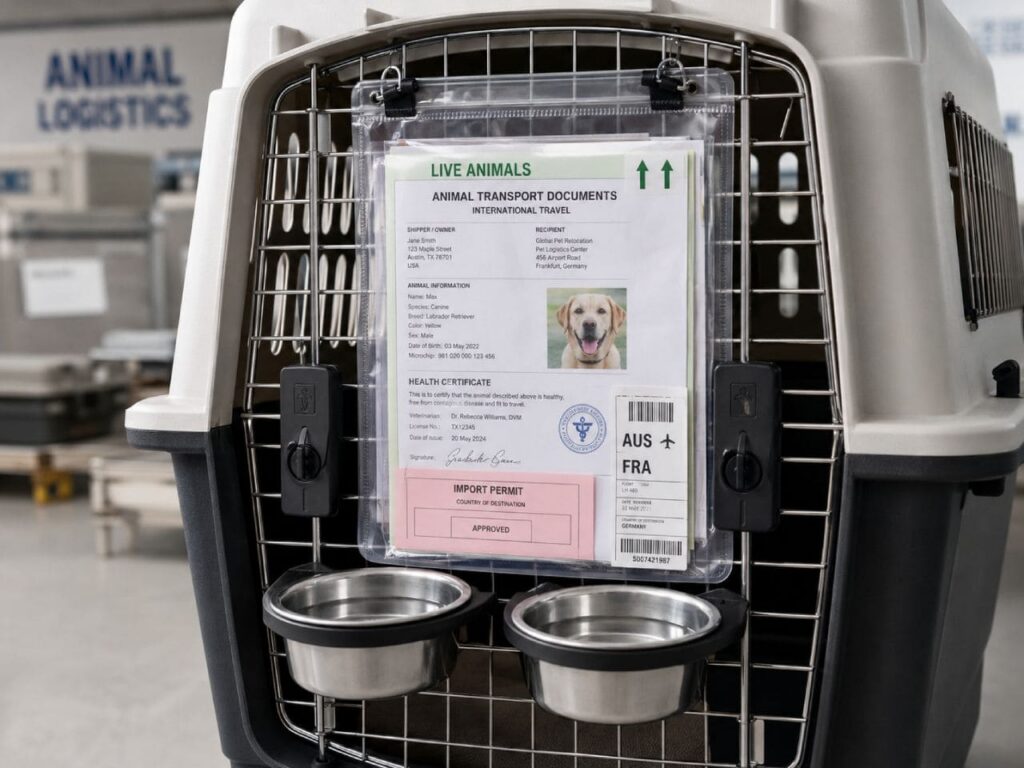
Airlines and international routes may require a crate that meets specific standards for size, ventilation, structure, hardware, food and water access, and animal comfort. A crate that is too small, poorly ventilated, damaged, or not accepted by the airline can delay the trip and create added expenses. Some pets may need custom or oversized crates, which can increase the total budget.
Crate training can also be helpful before travel. A pet that feels comfortable in the crate is more likely to have a calmer experience.
7. Health Certificates, Vaccines, & Documentation
Documentation is one of the most important parts of pet transportation. Depending on the route, your pet may need a health certificate, vaccination records, microchip information, import forms, government endorsement, parasite treatments, or other paperwork. For international travel, requirements can vary by country and may need to be completed within a specific time window.
Missing or incorrect paperwork can cause delays, rebooking fees, denied entry, or additional veterinary visits—which is one reason many owners choose professional support. A good transport partner can help identify what is needed and help you avoid preventable mistakes.
8. Destination Rules & Import Requirements
Every destination has its own rules. Some countries require simple documentation. Others require blood testing, import permits, government endorsement, parasite treatments, customs clearance, or quarantine as well.
Domestic travel can also involve state rules, airline policies, and health certificate requirements. These rules can change, which is why it’s important to verify requirements before booking.
The more complex the destination, the more planning and coordination the move may require.
9. Timeline & Urgency
Last-minute pet transport often costs more. Limited availability, urgent documentation, short booking windows, expedited appointments, and fewer flight options can all increase the price.
Planning early gives you more choices. You may have access to better routes, more flexible scheduling, shared ride options, and more time to prepare paperwork and crate training.
10. Seasonality & Weather Restrictions
Weather can affect pet travel, especially air cargo. Airlines limit pet travel during extreme heat or cold to protect animals. Summer, winter, holidays, and peak moving seasons can also affect availability and pricing. If your dates are flexible, your transport provider may be able to recommend a safer or more cost effective travel window.
11. Level of Service
A basic transportation quote may only include the movement of your pet from one place to another. A full service relocation quote often involves route planning, document guidance, crate support, pickup, delivery, airline coordination, customs help, and travel updates.
The higher price of a full service option reflects the time, expertise, and coordination involved. For simple moves, basic transport may be enough. For complex moves, professional support can save time, reduce stress, and help prevent costly mistakes.
Are Professional Pet Transport Services Worth the Cost?
For simple local travel, some owners can handle pet transportation on their own. If your pet is healthy, the route is short, and there are no complicated requirements, a do-it-yourself option may be realistic.
Professional pet transport becomes more valuable when the move is long distance, international, time sensitive, or complicated. It may also be the better choice if your pet is large, anxious, older, medically sensitive, or affected by airline restrictions.
The value is not just in transportation but also in planning, safety, communication, and experience.
A professional provider can help you answer questions like:
- Which travel option is safest for my pet?
- What documents do I need?
- Does my pet need a specific type of crate?
- Can my pet travel by air?
- Would ground transport be better?
- Are there breed or weather restrictions?
- What happens when my pet arrives?
- How do I avoid delays or denied travel?
Pets in Transit helps owners move through these questions with practical guidance and customized planning. Instead of guessing, you can build a travel plan around your pet, destination, and timeline.
Tips to Save Money on Pet Transport Services
Saving money on pet transport requires making smart decisions early so you can avoid unnecessary fees, delays, and poor fit service options.
Use the Right Crate the First Time
Buying the wrong crate can lead to extra expenses and travel delays. Before purchasing one, confirm the size and construction requirements for your pet’s transportation method. Your pet should be able to stand, turn around, and lie down comfortably.
For air travel, the crate may also need to meet airline or international standards.
Plan as Early as Possible
Early planning gives you more route, airline, and scheduling options. It also gives you more time to gather documents, purchase the right crate, complete vet visits, and prepare your pet for travel. Last-minute moves can be done in some cases, but they often cost more and come with fewer choices.
Be Flexible with Travel Dates
Flexibility can lower costs, especially for shared ground transport or routes with limited availability. Flexible pickup and delivery windows can also make scheduling easier and more affordable. If your pet doesn’t need to travel on an exact date, your provider may be able to find a more efficient option.
Compare What’s Included with the Price
A cheaper quote may not actually be cheaper once you add missing services. Before choosing a provider, ask what the quote includes:
- Pickup and delivery?
- Airport transfers?
- Document guidance?
- Crate support?
- Customs assistance?
- Overnight care if needed?
- Travel updates?
A higher quote may offer better value if it includes the planning and support your pet’s trip requires.
Choose Shared Transport When It Makes Sense
Shared ground transport can be a smart way to reduce cost if your pet is healthy, your timeline is flexible, and you are comfortable with a longer route. It may not be the right choice for pets that are anxious, senior, medically sensitive, or better suited for direct travel. The goal is to balance cost with comfort and safety.
Prepare Documentation Early
Missing paperwork can become expensive quickly. You may need extra vet visits, corrected forms, new travel dates, or additional coordination. Additionally, for international travel, some requirements must be completed in a specific order and within a specific time frame. Starting early gives you a better chance of getting everything done correctly.
Work with a Provider That Gives a Clear Quote
A clear quote helps you understand what you are paying for. It should explain the transportation method, service level, pickup and delivery details, potential extra costs, and what support is included.
Pets in Transit provides customized transport planning because every pet move is different. A personalized quote gives you a more accurate understanding of the total cost and the best option for your pet.
FAQs About Pet Transport Cost
How Much Does It Cost to Transport a Pet Locally?
How Much Does It Cost to Ship a Pet Across the Country?
Cross country pet transport often ranges from about $800 to $5,000 or more. Shared ground transport may be less expensive, while private ground transport or air travel can cost more depending on the pet’s size, route, crate needs, and service level.
Is Ground Transport Cheaper Than Flying a Pet?
It depends on the route. Ground transport can be cheaper for regional moves or shared rides. Air travel may be more efficient for long distances, but it can include airline fees, crate costs, handling charges, airport transfers, and documentation. For some pets, ground transport may also be safer or less stressful. For others, flying may reduce total travel time.
What Is the Cheapest Way to Transport a Pet?
Shared ground transport is often one of the more affordable professional options. However, it’s not right for every pet. Travel time, route, weather, pet temperament, health, and safety should all be part of the decision. The cheapest option is only a good option if it still meets your pet’s needs.
Why Is International Pet Transport So Expensive?
International pet transport costs more because it involves more than transportation. You may need veterinary paperwork, vaccines, microchip verification, government endorsement, import permits, customs clearance, airline coordination, destination services, and quarantine depending on the country. Each destination has different rules, so pricing can vary widely.
Can I Transport My Pet Myself?
Yes, in some cases. A simple local move or straightforward domestic trip may be manageable without professional help. Professional support is often worth considering for long distance moves, international relocations, complex documentation, large pets, anxious pets, tight timelines, and routes involving multiple transportation steps.
What Should Be Included in a Pet Transport Quote?
A good pet transport quote should explain the transportation method, pickup and delivery details, estimated route, service level, crate requirements, documentation support, travel updates, and any additional fees that may apply. For international moves, it should also clarify what support is included for import rules, customs, government endorsement, and arrival services.
How Far in Advance Should I Book Pet Transport Services?
It’s best to start as early as possible, especially for international moves. Some destinations require steps that may take weeks or months. Domestic transportation usually requires less lead time, but early planning still gives you more route options and helps avoid last minute costs.
Do Pet Transport Companies Provide Crates?
Some pet transport service providers may offer crate guidance, crate purchase support, or recommendations based on airline and route requirements. Others may expect owners to provide the crate. Before booking, ask whether crate support is included and confirm that the crate will meet travel requirements.
Are Pet Transport Services Safe?
Reputable pet transport providers focus on safe routing, proper crates, documentation, communication, comfort, and responsible handling. Safety depends on choosing the right service for your pet and working with a provider that understands the requirements of the trip. Look for experience, clear communication, transparent pricing, and a plan tailored to your pet.
Ready to Plan Your Pet’s Trip? Contact Pets in Transit
Pet transport costs vary because every pet move is different. Distance, travel method, pet size, breed, destination rules, documentation, timing, seasonality, and service level can all affect the final price. The right option is the one that balances cost, safety, comfort, and reliability for your pet.
At Pets in Transit, we help pet owners compare transportation options, understand travel requirements, and plan safe domestic and international moves. Whether your pet needs local ground transport, long distance relocation, air travel coordination, or full service support, the first step is getting a custom quote based on your pet’s needs.
Planning a move or trip with your pet? Contact Pets in Transit today to request a free quote and build a travel plan that helps your pet arrive safely and comfortably.
Bon voyage!